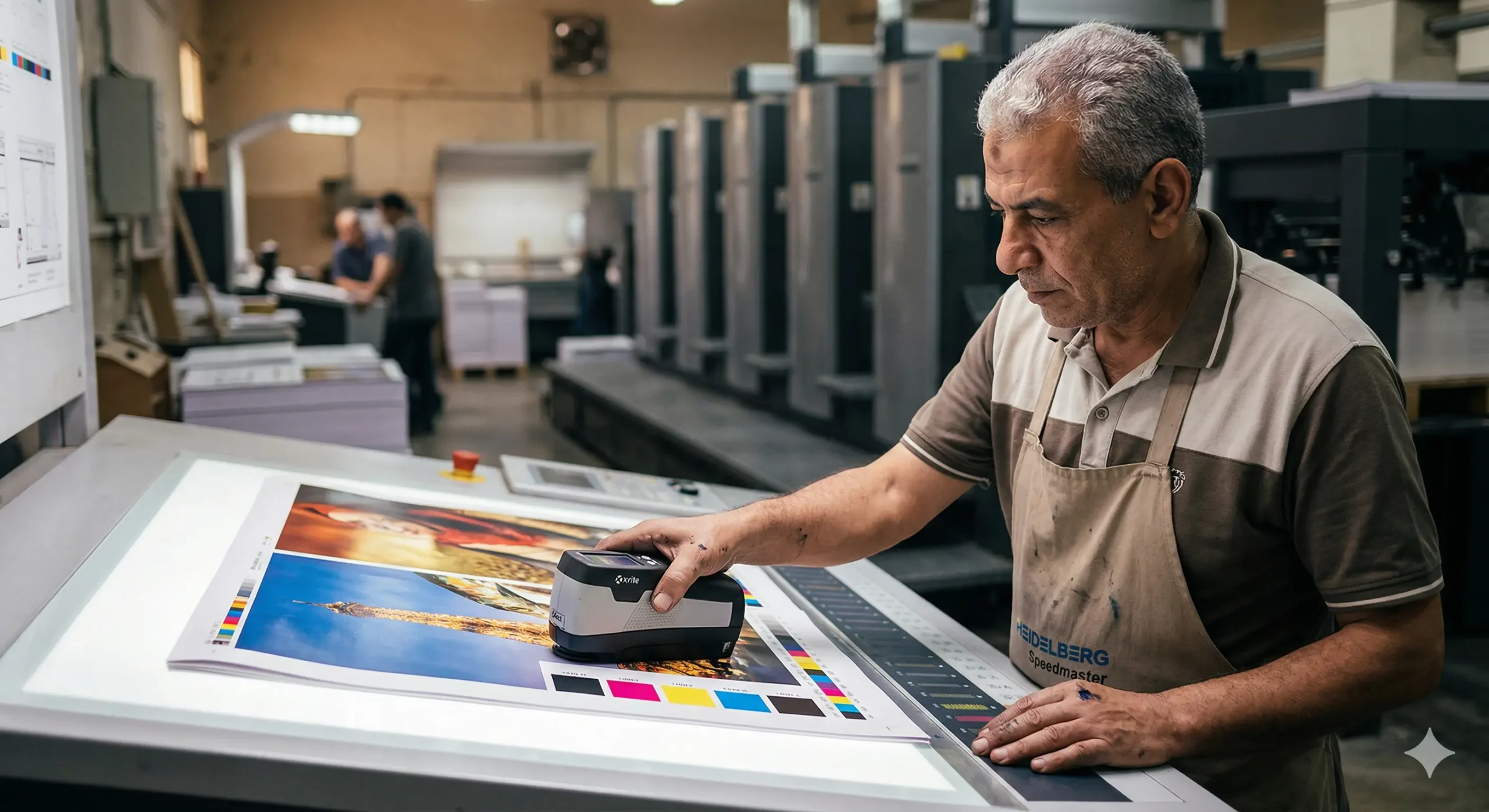
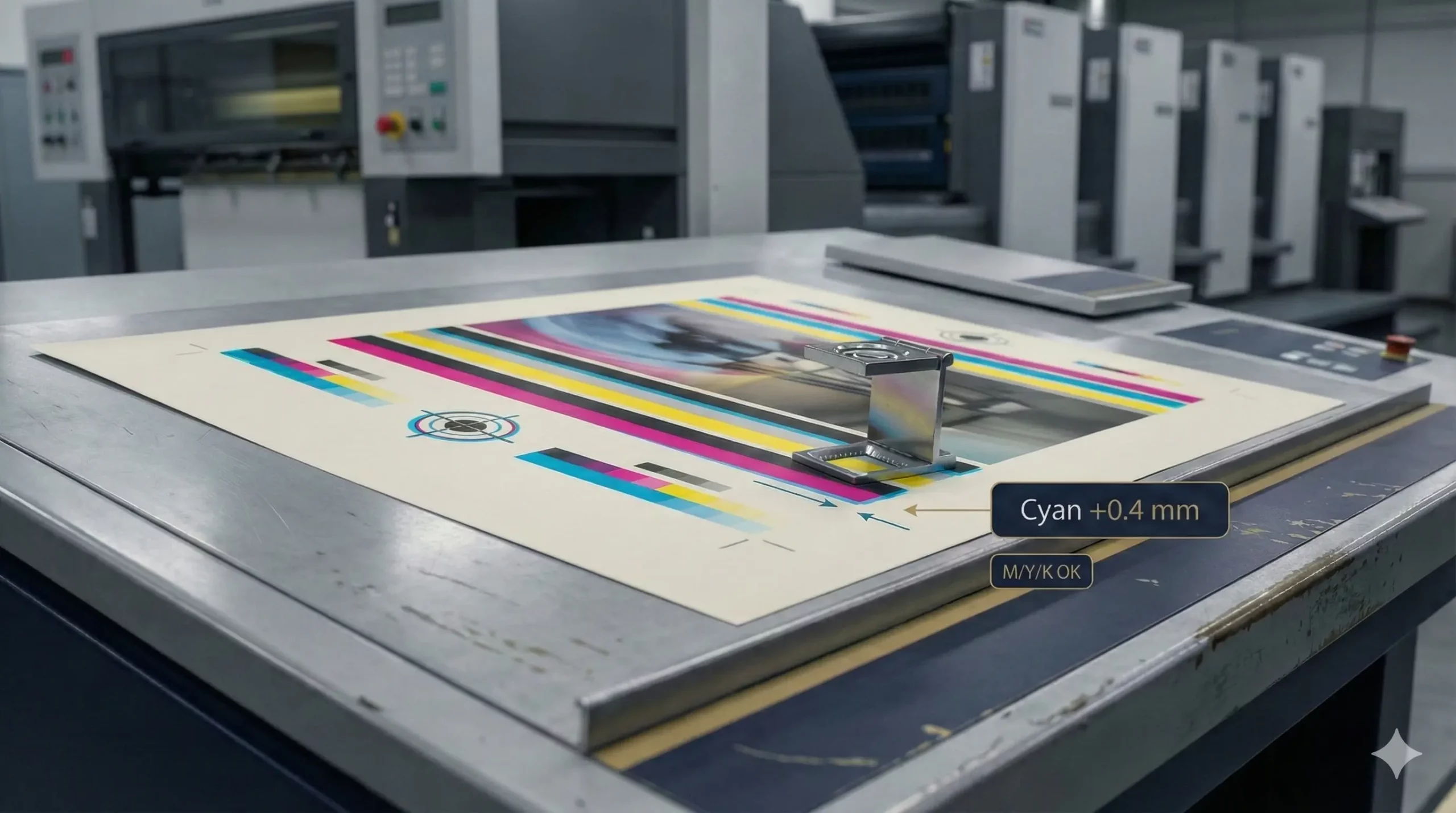
Printing Solutions in Egypt — Paper for Every Press Type

Printing Solutions in Egypt — Paper for Every Press Type

Choosing the right paper is a core part of getting clean color, sharp text, and consistent results on any press. These printing solutions in Egypt cover the most common press types used by print shops and production houses— offset, digital, large format, and packaging—with practical paper recommendations you can apply before ordering.

Quick checklist before you print

Before you buy paper, confirm:

  • Press type: offset / digital / large format / packaging
  • Paper type: woodfree (uncoated), coated (art), kraft, NCR, label materials
  • GSM (weight): based on job purpose (text pages vs covers vs packaging)
  • Size and finish: sheet or roll, matte or gloss, and final trim size
  • Ink coverage: heavy solids need better surface and drying control

If you want a fast recommendation, send us: press type + job use + GSM range + size + quantity.

Offset printing solutions (sheetfed & commercial)

Offset printing is widely used for brochures, catalogs, books, magazines, and marketing materials. Paper choice affects ink holdout, drying time, dot gain, and set-off.

Recommended paper types for offset printing:

  • Woodfree (uncoated) paper for books, office documents, and text-heavy prints (common ranges: 70–120 GSM)
  • Coated / art paper (matte or gloss) for rich color prints like brochures and catalogs (common ranges: 115–170 GSM)
  • Heavier coated grades for covers and premium work (200–350 GSM)

Practical tips:

  • For high color and sharp images, choose coated paper (gloss = vibrant, matte = elegant and low glare).
  • For text-heavy jobs, choose woodfree/uncoated for readability and reduced glare.
  • If you face set-off or slow drying, reduce heavy ink coverage where possible or choose a more suitable coated grade and allow sufficient drying time.

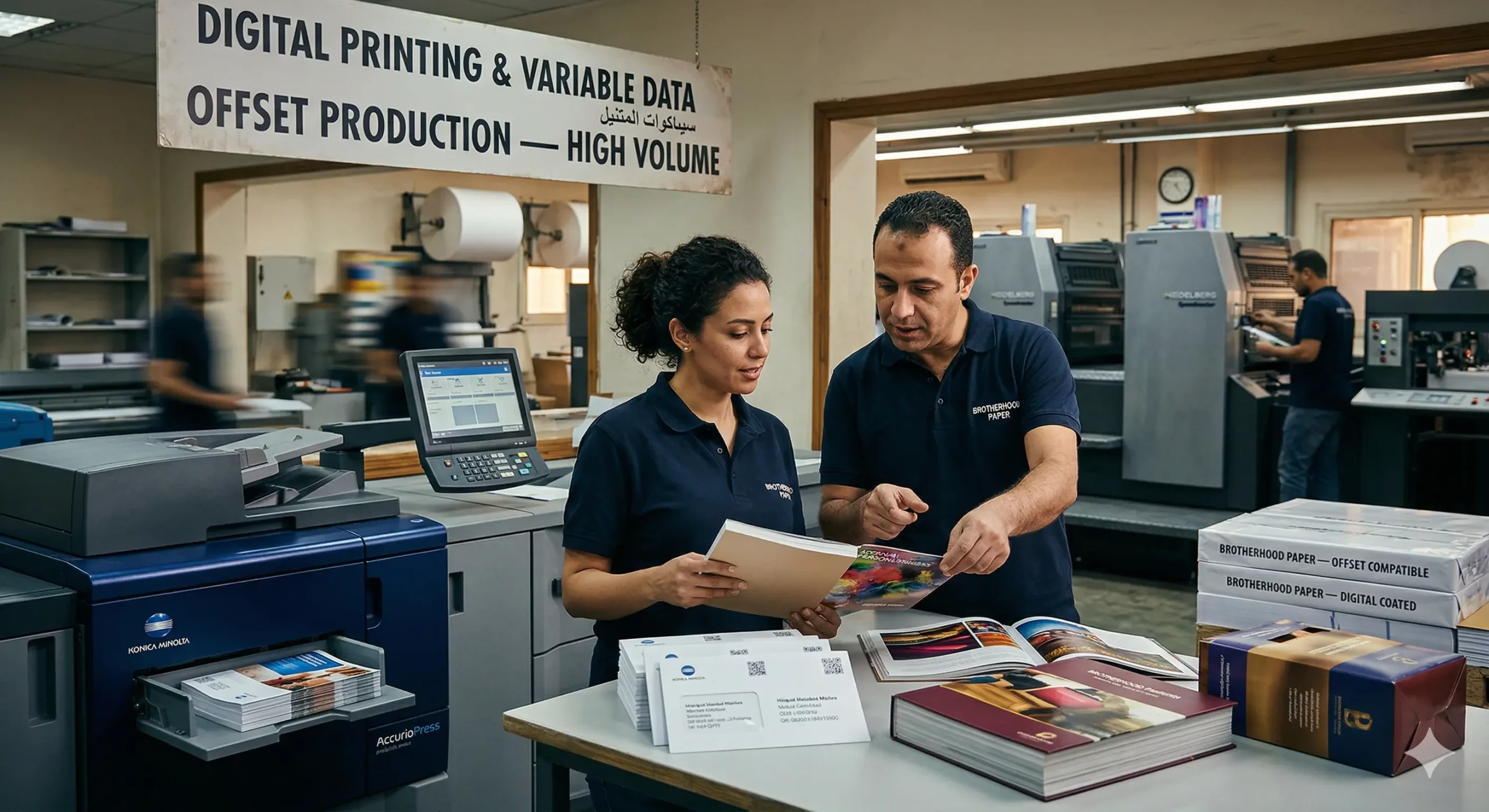
Digital printing solutions (laser & production digital)

Digital presses are sensitive to paper surface, moisture, and curl. The best results come from paper with stable flatness and correct surface for toner/ink.

Recommended paper types for digital printing:

  • High-quality woodfree/uncoated for laser prints (documents, manuals, short-run jobs)
  • Coated / art paper for high color digital prints (brochures, flyers, menus)
  • Label / sticker materials for digital labels (based on application needs)

Practical tips:

  • If you see curl, static, or feeding issues, the GSM and surface may need adjustment.
  • For strong colors, coated paper usually performs better than uncoated.
  • Always confirm the printer supports the GSM you want (especially 200+ GSM).

Large format printing solutions (posters & signage)

Large format jobs need paper that holds ink well and remains stable during printing and finishing.

Recommended paper types for large format:

  • Coated poster paper for indoor posters and promotions (common ranges: 150–250 GSM)
  • Coated / art paper for high-detail posters (depending on finishing)
  • For special applications (lamination, outdoor use), paper choice depends on the finishing method and environment.

Practical tips:

  • If the job will be laminated, confirm the paper surface is compatible with the lamination type.
  • Share required final size and finishing method to avoid rework.

Packaging & label printing solutions

Packaging jobs require paper that can handle folding, finishing, and handling. Labels require correct adhesive and surface choice.

Recommended paper types for packaging & labels:

  • Kraft paper for bags, wrapping, and packaging
  • Label / sticker materials for product labeling and branding
  • NCR (carbonless) paper for invoices and multi-part forms (common business use)

Practical tips:

  • Packaging paper should match the end use (strength, foldability, and print finish).
  • Labels should be selected based on application: indoor/outdoor, moisture exposure, and adhesion needs.

How Brotherhood Paper helps printing businesses in Egypt

  • Clear recommendations based on press type + job use
  • Confirming GSM, size, finish, and availability before purchase
  • Preparing orders in advance when possible to save time
  • Fast contact on WhatsApp for quotes and specifications

WhatsApp: +20 122 212 3986
Email: yassersami@brotherhoodpaper.com

Related guides

Cyan Color

Why Your Cyan Plate Looks Loose (And How to Fix It)

Registration drift, fan-out, and moisture-induced color shift aren't random. Learn the press-side corrections that stop color wandering before Unit 4.
The 4-Color Trapping Guide: When to Overprint and When to Knockout

Trapping prevents white gaps between colors. Get the decision matrix for text, solids, and process builds that eliminates reprints.

Ink Density Targets: CMYK Values That Actually Work on Egyptian Presses

ISO 12647 is written for European presses. Here's the adjusted density spec for GTO, Komori, and Heidelberg models running in 30°C pressrooms.

Dot Gain Compensation: The Curve You're Not Using (But Should)

Your 50% halftone prints at 62%? That's dot gain. Learn how to build press-specific curves that deliver accurate midtones.

Blanket Packing for Coated vs. Uncoated: The 0.05mm Rule

Wrong packing = crushed dots or weak ink transfer. Get the caliper formula for perfect kiss pressure on every substrate.

Why Your Black Looks Brown: Ink Laydown Sequence Matters

CMYK vs. KCMY vs. KYMC—each order produces different black density. Match your sequence to your substrate and avoid muddy blacks.

The Press Check That Catches 90% of Problems Before the Run

Color bars, registration marks, and trap stars aren't decorative. Learn which metrics to measure and what tolerances matter.

Fountain Solution pH: The Number That Controls Everything

pH too low = tinting. Too high = drying issues. Get the target range for different inks, papers, and ambient conditions.

How to Run 300 GSM Coated Stock Without Marking or Offsetting

Heavyweight coated is profitable—if you can deliver it clean. Anti-set spray, delivery timing, and ink tack sequence explained.

Multi-Color Registration on Long Sheets: The Gripper Math

70×100 sheets amplify every registration error. Learn the fan-out prediction formula and grain orientation that keeps colors tight.

Digital to Offset Color Matching: Why Your Proof Doesn't Match the Press

Proofs use RGB simulation. Presses use CMYK inks. Bridge the gap with the right ICC profile and viewing conditions.

Ink Drying Failures: Set-Off, Chalking, and Rub-Off Prevention

Paper that smears after 24 hours isn't "bad paper"—it's mismatched ink chemistry. Get the substrate-to-ink pairing guide.

The Makeready Checklist: 15 Minutes That Saves 2 Hours of Troubleshooting

Blanket wash, roller pressure, dampening balance, and impression settings checked before Unit 1 runs = zero surprises.

When to Re-Plate: The Dot Integrity Test for Long Runs

Plates wear. After 20,000 impressions, your highlights disappear. Learn the on-press inspection that tells you when to swap plates.

Stay Updated with Market Prices

Join our newsletter to get weekly paper price updates and exclusive

Join Our WhatsApp

Paper: A witness to our civilization. Delivering quality paper products since 1975.

Faggala, Cairo, Egypt

yassersami@brotherhoodpaper.com

+20 122 2123 986

© 2025 Created with Brotherhood paper